
- Solutions
Dynamics 365 Commerce
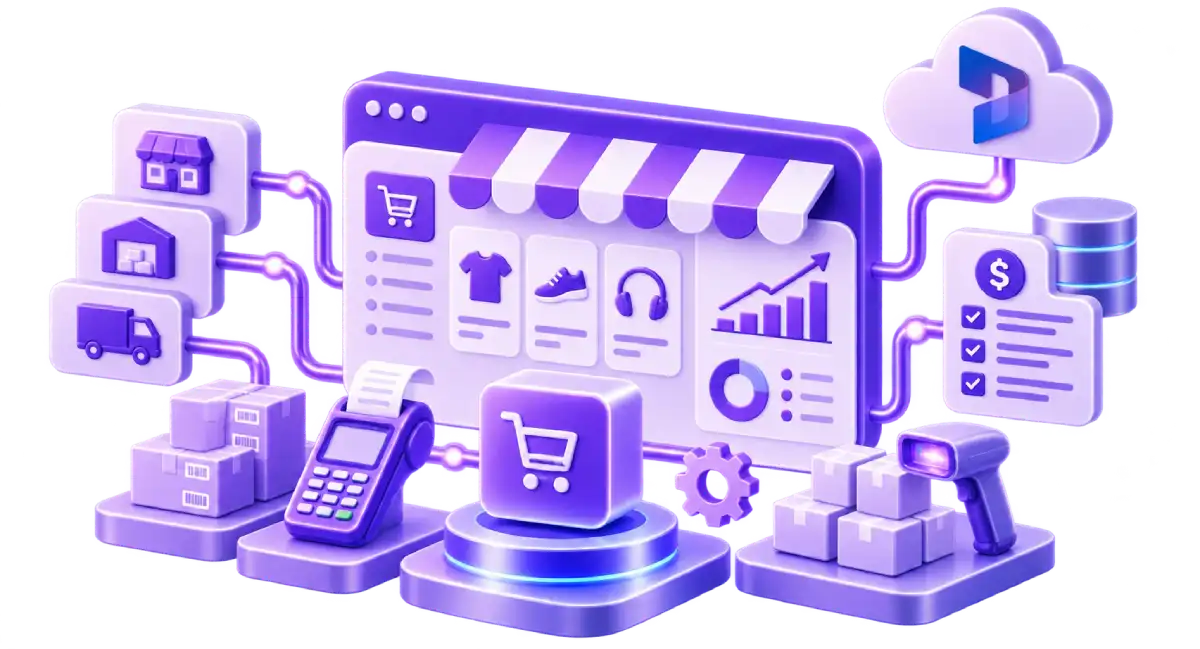
Core Dynamics 365 Commerce Features Built for Complex Operations
Standard e-commerce deployments create isolated data silos that break the moment an order requires complex warehouse routing or tiered B2B pricing. DynaSUM configures Dynamics 365 Commerce on Dataverse to operate as a direct, structural extension of your backend finance and inventory logic.
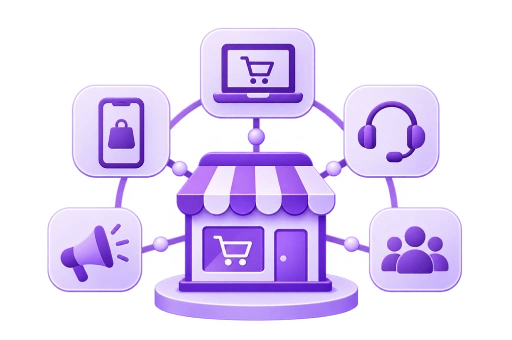
Omnichannel Retail Engagement
We consolidate your physical in-store POS hardware, digital storefronts, and call center interfaces into a single Dataverse entity model. Customers access the exact same product catalog and pricing logic across every touchpoint without latency. Inventory updates instantly.
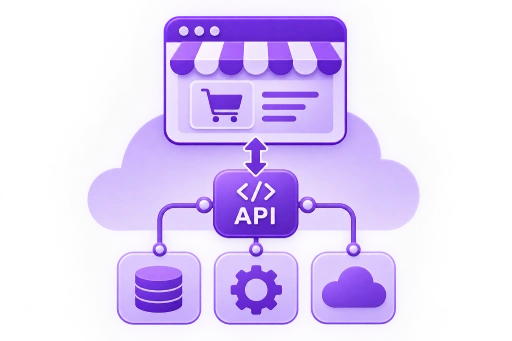
Headless Architecture Deployment
DynaSUM engineers build and deploy an agile headless architecture decoupling your front-end web layers from back-office D365 Finance operations. Your marketing team deploys new digital interfaces rapidly. Core financial logic remains protected. API integration debt drops to zero.
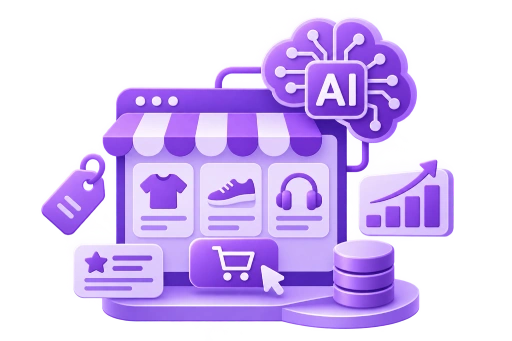
AI-Driven Intelligent Commerce
Microsoft’s native AI intercepts transactional data at the gateway to identify and block payment fraud before it hits your ledger. Store associates receive localized, actionable inventory distribution insights via mobile POS terminals. Legitimate orders process immediately. Margins stay intact.

Customer Loyalty Personalization
Generative AI analyzes historical purchase data to deliver personalized product recommendations and cross-selling logic directly into the checkout flow. High average order values follow. We automate the targeted promotional mechanics that drive long-term customer retention.
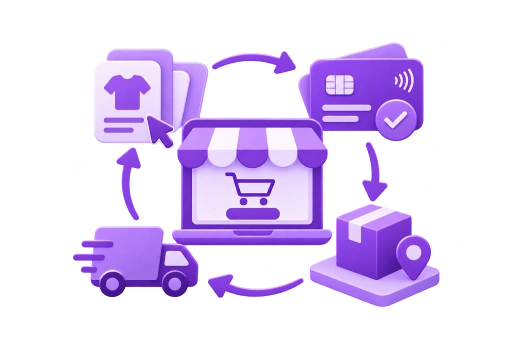
Streamlined Digital Commerce
Centralized order management engines synchronize your fast-loading digital storefronts and modern POS terminals directly to Dynamics 365 Finance. This accelerates the entire quote-to-cash cycle. Invoices generate automatically upon fulfillment. Your working capital moves faster.
DynaSUM Approach to Dynamics 365 Commerce Implementation
Omnichannel Architecture Consulting
As your Dynamics 365 Commerce consulting team, we map your existing warehouse logic, complex payment gateway workflows, and baseline retail operations before licensing a single user. This ensures your digital storefront must reflect back-office reality. We engineer enterprise architecture first. You avoid expensive implementation failures later.
D365 Commerce Implementation
Dynamics 365 Commerce implementation experts configure the headless commerce core and build fault-tolerant API pipelines to your third-party logistics providers. We deploy intelligent digital storefronts and modern POS systems wired directly to your central ERP. Data flows natively.
Legacy Retail Data Migration
Extracting fragmented loyalty tiers and historical transaction ledgers from legacy POS systems is necessary and still a complex process today. We clean that data. We map complex B2B pricing hierarchies into Dataverse exactly as your CFO requires and then migrate to modern cloud-enabled systems running on Dynamics 365 Commerce.
Managed Retail Operations and AP/AR BPO
Deploying the platform is only half the mandate. We provide continuous technical management alongside our outsourced BPO finance teams. Our personnel handle the daily high-volume invoicing, resolve chargeback disputes, and execute your multi-entity financial close.
Intelligent Commerce Operations Automation Powered by Microsoft AI
AI reduces the crushing manual workload of digital merchandising and basic customer service. High-stakes financial discrepancies and VIP client escalations demand human authority. We architect the boundary between automation and human intervention.
- AI agents autonomously generate localized product catalog descriptions and resolve Tier-1 order status queries instantly.
- Agentic AI enabled systems automatically route complex return authorizations or high-value account issues directly to your human support desk.
- Copilot actively assists your in-store associates and remote call center agents. It pulls real-time, 360-degree customer purchasing histories and network-wide inventory data. Your human agents negotiate with full context.
Retail teams adapt to sudden seasonal demand spikes dynamically. The architecture absorbs the volume.
The Economic Value of a Unified Retail and ERP Architecture

Accelerated Cash Flow and Reconciliation
Automated backend data mapping destroys the lag between a front-end sale and back-office accounting.
- Unified transactional data feeds directly into native D365 systems accelerating daily multi-entity financial close.
- Built-in AI intercepts suspicious gateway activity to trigger a massive reduction in chargeback penalties.
- DynaSum’s dedicated BPO units manage retail AP/AR processing and exception handling.
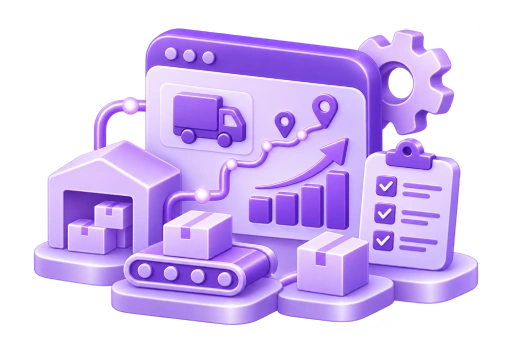
Optimized Supply Chain Economics
Connecting the storefront directly to D365 Supply Chain Management empowers your logistics network making it more precise and accurate.
- Real-time inventory visibility across all regional distribution centers radically reduces expensive dead stock accumulation.
- Intelligent order routing logic bypasses backordered facilities to slash fulfillment costs and shipping distances.
- Unified logistics planning guarantees delivery timelines remain accurate at the exact moment of checkout.
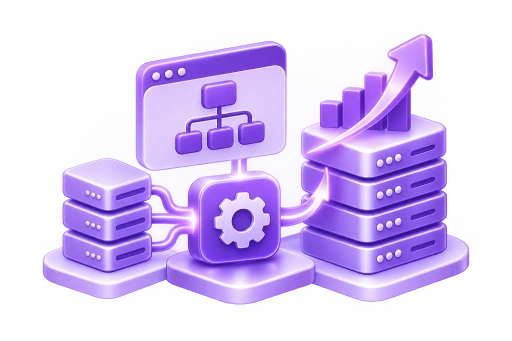
IT Consolidation and Scalability
Operating a patched network of retail systems and applications drains your IT OPEX. We eliminate that overhead.
- Retire disconnected legacy e-commerce tools, disjointed POS software, and isolated loyalty apps to recover significant capital.
- Microsoft’s native cloud architecture scales automatically to absorb extreme transactional loads during Black Friday events.
- Consolidating operations inside a unified Microsoft environment instantly upgrades your global payment security and compliance posture.
Dynamic 365 Commerce Solutions Configured for Your Sector
01.
Retail and eCommerce
Unifying physical flagship stores, regional call centers, and high-traffic digital channels prevents inventory stockouts and customer abandonment.
- Synchronized product catalogs ensure pricing accuracy across every physical and digital touchpoint.
- Store associates utilize mobile POS to process transactions and check network-wide availability instantly.
- Centralized loyalty programs track purchasing behaviors to trigger automated, highly targeted marketing campaigns.
02.
Wholesale and Distribution
Managing complex tiered B2B pricing models, bulk ordering constraints, and parent-child account hierarchies breaks basic e-commerce software.
- Buyers access specialized portals featuring pre-negotiated contract pricing and customized product assortments.
- Automated reordering logic triggers bulk replenishment based on historical consumption rates and inventory thresholds.
- Sales teams configure massive, complex quotes quickly using real-time availability data from the warehouse.
03.
Manufacturing
Shifting toward Direct-to-Consumer (D2C) channels requires digital storefronts capable of handling complex, configurable industrial products without manual engineering intervention.
- Engineers build configurable product models that customers can manipulate and quote directly on the portal.
- D2C orders route instantly to the factory floor, bypassing traditional dealer network bottlenecks.
- Warranty claims and aftermarket parts ordering occur through a unified, self-service digital interface.
04.
Food and Beverage
Distributing perishable inventory demands rapid fulfillment execution, strict lot traceability, and uncompromising temperature control routing.
- Expiration date logic prioritizes the fulfillment of older inventory to minimize expensive food spoilage.
- End-to-end batch traceability ensures rapid, surgically precise product recalls when contamination events occur.
- B2B grocery buyers utilize fast-order templates to execute massive weekly replenishment lists in seconds.
05.
Hospitality
Managing digital property bookings, physical on-site retail transactions, and integrated loyalty rewards requires a unified financial ledger.
- Guests utilize a single digital profile to book rooms, order room service, and purchase spa products.
- On-site POS systems at restaurants and golf courses sync instantly to the central guest folio.
- Points accrued during physical property visits apply automatically to future online booking discounts.
Your Strategic Partner for Microsoft Commerce and Finance Alignment

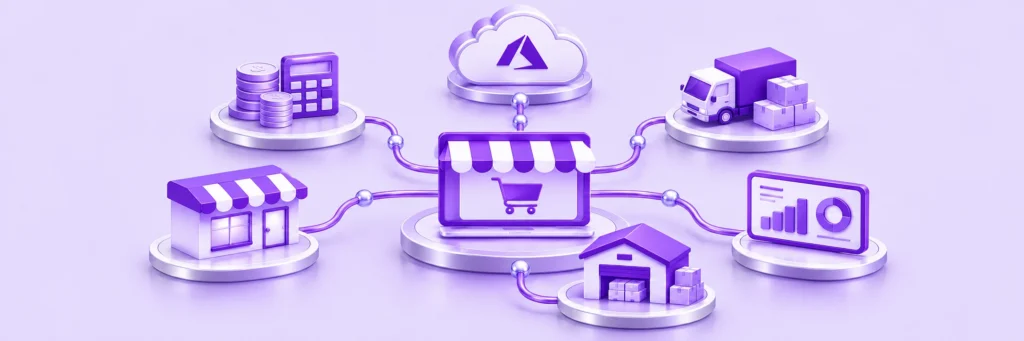
We Handle Tech and Operations
DynaSum puts the technical Dataverse architecture and the offshore retail finance BPO under one roof. We build it. We run it.

Work on Problems First
We diagnose structural supply chain bottlenecks and ledger reconciliation failures before deploying a single storefront. Business problems dictate the code.

Connected Ecosystem
We connect your commerce operations natively to D365 Finance, Supply Chain Management, and Azure. The ecosystem functions as one unit.

Global Delivery Ecosystem
Our global delivery model provides 24/7 managed technical support and ongoing BPO financial operations for international retail footprints.
Enrich Your Commerce Operations with AI-Enabled D365 Solutions
Dynamics 365 Commerce offers a wide range of features including POS, headless commerce, content creation, customer engagement, and more to help you not only manage but scale your commerce business.
FAQs
1. What is the difference between Dynamics 365 Commerce and standard e-commerce platforms?
Standard platforms operate as isolated web instances requiring custom APIs to communicate with your backend. D365 Commerce sits directly on Dataverse, natively sharing the exact same database as D365 Finance and Supply Chain Management. Data lag vanishes.
2. Do we have to replace our existing ERP to use D365 Commerce?
No. While D365 Commerce integrates natively with D365 Finance, we utilize its headless API architecture to connect the commerce engine directly to third-party legacy ERPs. Your core financial system remains untouched.
3. How does DynaSum’s BPO offering integrate with the technical implementation?
We architect the system, and our offshore finance teams use it. As we deploy D365 Commerce, our BPO units take over your daily AP/AR processing, chargeback disputes, and financial reconciliation directly within the new environment.
4. Can D365 Commerce handle complex B2B pricing structures?
Yes. The platform natively supports deep account hierarchies, tiered contract pricing, volume-based discounts, and custom catalog assortments specifically designed for wholesale and distribution operations.
5. What is headless commerce, and why does my enterprise need it?
Headless commerce physically separates your front-end digital storefronts from your back-office transactional engine. Your marketing teams can deploy new websites or mobile apps rapidly without risking the stability of your core ERP logic.
Still have questions?
We’re happy to help. Reach out to discuss your needs, challenges, and how AI can fit your business.